 |
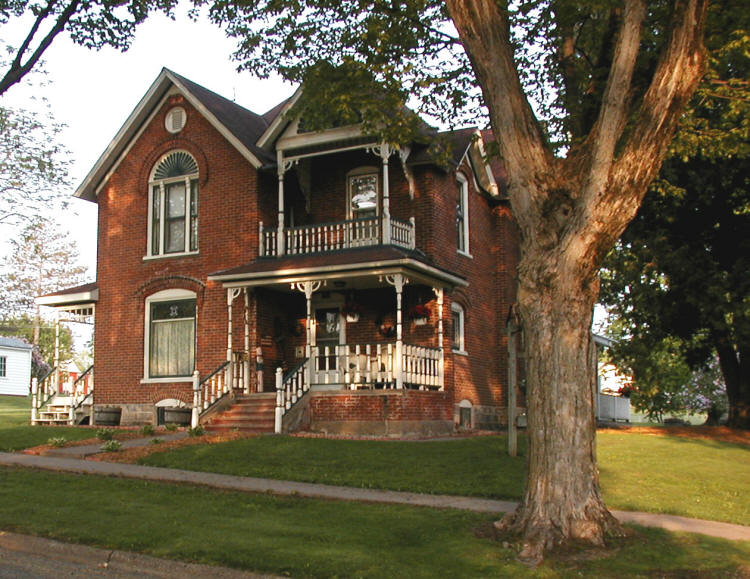
1. August Schoengarth Home-302 Oak Street August Schoengarth operated a brick factory, located west of his home, which is now Tock Field. If you look carefully, you'll notice Tock Field is at a much lower level compared to adjacent Park Street, as this was the land used to obtain the clay for Schoengarth's brick business. Many of the buildings on Hewett Street have an inner core made from bricks manufactured at Schoengarth's brick factory. The house was built with a solid brick wall across the upper floor of this home, which divided the maid's quarters from the dormitory where the workers from the brick factory stayed. August's son, Oscar Schoengarth, lived in the house just north of his father's home. Oscar's house was wedding present from his father. In later years, Oscar also know as O. W. Schoengarth, became a prominent and well respected local judge. It was O. W's son, Judge Lowell Schoengarth and wife, Virginia, who donated the land for Tock Field to the city. Wisconsin Supreme Court Justice, Bruce Beilfuss, Drs. Milton and Sarah Rosenkrans, and Mr. and Mrs. Norm Saracoff were all subsequent owners. Today (2006) John and Karen Gaier own the home. Sketch by B. Harder |
|
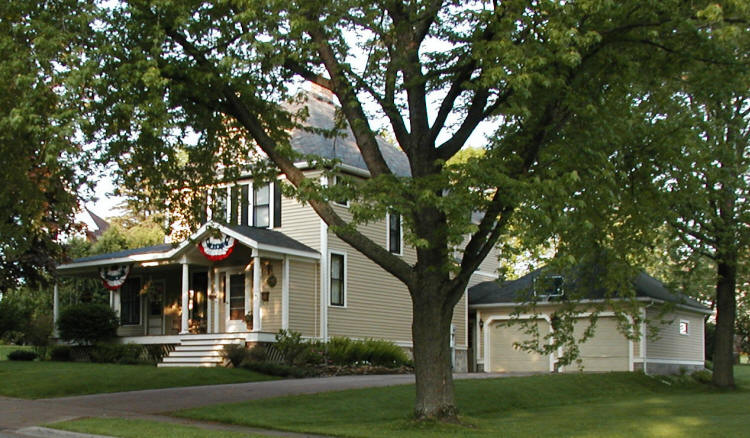 |
2. Campman Home-300 Clay Street This home was owned for many years by William Campman who was born in 1878. As a child, he moved to Neillsville by stagecoach from Hatfield. In 1898, he enlisted in the U.S. Army and fought in the Spanish-American War. In 1904, after the war was over, he went to work for the "Grow and Schuster" law firm as an attorney. (Grow and Schuster" eventually became the well-known Neillsville law firm of "Schuster and Campman.") The present owners (2006) Michael and Karen Kuchenbecker, have restored the home and it is one of Neillsville's more attractive residences. Sketch by B. Harder |
|
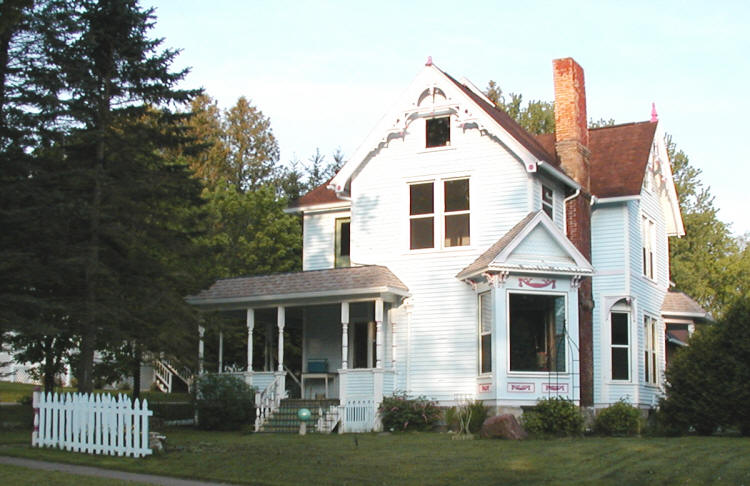 |
3. Marsh-Grow Home-218 Clay Street. This home was built for Lute Marsh. It was subsequently owned by Charles F. Grow--a local attorney of the Grow-Schuster Law firm. Mr. Grow was highly regarded as a lawyer and civic leader. In more recent years, several generation of the Drake family lived here. An interesting feature of the home is the parquet flooring. The main entrance, parlor, dinning room, living room each have a parquet floor and each has a different design. The owners of this home are now (2006) Jim and Charlene Arneson and they are currently involved in restoration project. Sketch by B. Harder |
|
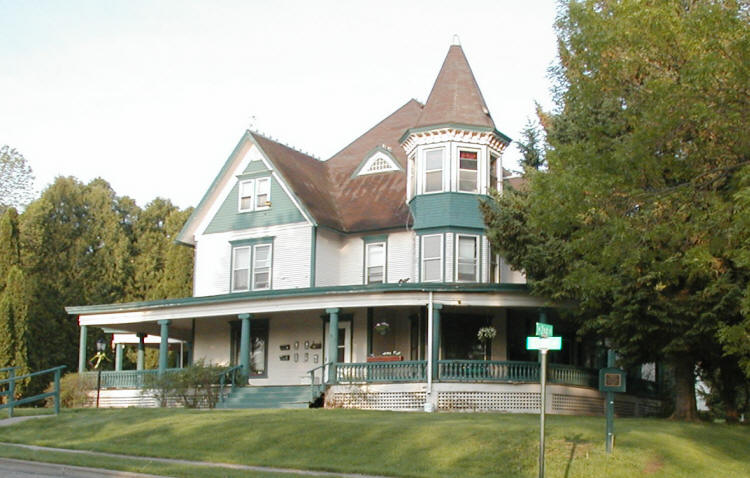 |
4. Cornelius House-118 Clay Street at the corner of 2nd and Clay Streets stood the stately Cornelius house, once serving as the locality of the Lowe Funeral Home in the late 1920s and 1930s. The large, 3-story home featured a ballroom on the second floor which was used for entertaining guests and on occasions, a band would be obtained so that the guests could enjoy dancing. In 1993 it was an apartment house. This home was later "The Hubing Apartments" and now (2007) has yet another owner and is somewhat in need of repair. George Hubing Home (118 Clay Street) Charles Cornelius, a large land owner and builder of the First National Bank of Neillsville in 1909, built a beautiful Colonial home in 1910, with a ballroom with squint window and cupola on third floor and solid oak woodwork and floors throughout the entire house, in southern limits of the city of Neillsville, at that time the handsomest residence in Clark County, surrounded by spreading lawns, shrubbery, flowers, and hedges with a park and fountain and pretty walks. This home is presently owned by Mr. and Mrs. George Hubing, 118 Clay Street, Neillsville, Wisconsin, which they purchased in 1947. Source: 1970 Atlas of Clark County |
|
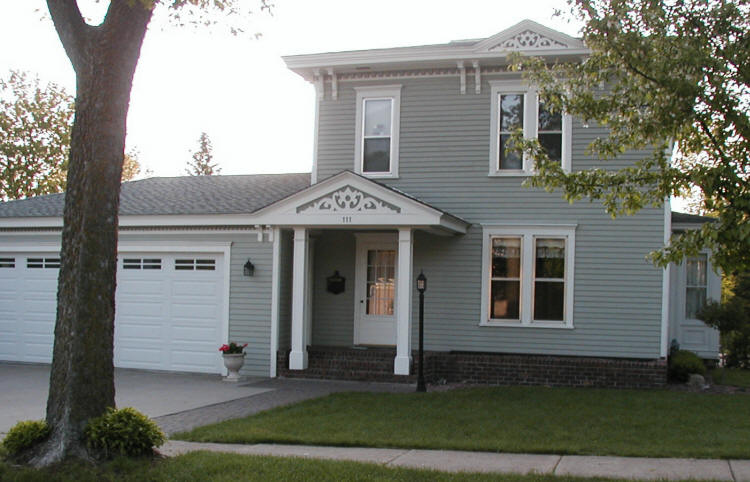 |
5. Captain A. C. Martin-111 Clay Street Captain A. C. Martin was born in Norway in 1867. As a young man, he was manager of the Connor Retail Lumber Company of Marshfield. He later managed the company's lumber operations in Granton and Neillsville. There are, or have been, several homes in the city that have the same design as this house (e. g. Ewing Home on Grand Avenue). The present owners (2007) are Dan Herbrand. They have worked hard to restore and redecorate this home inside and out and their effort shows. Sketch by B. Harder. |
|
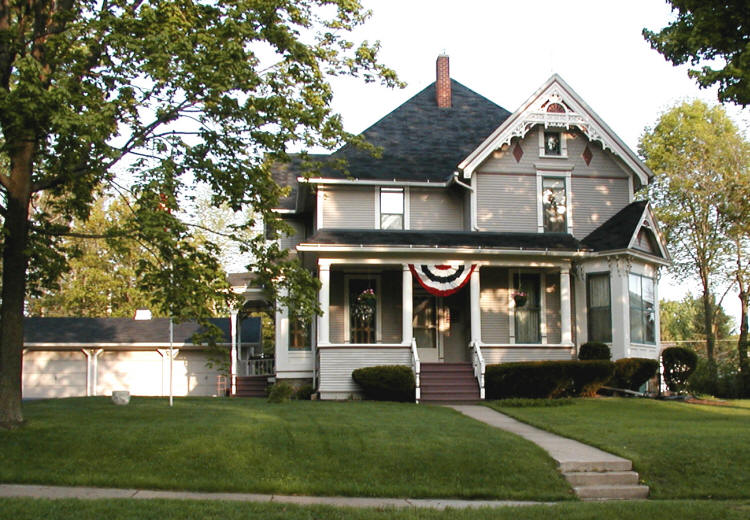 |
6. George W. Trogner House, National Register of Historic Places George W. Trogner arrived in Neillsville in the fall of 1865 after observing Lee's surrender. He began his own carpentry business and wagon shop in 1867, going on to become Neillsville's master builder, credited with constructing many of Neillsville's substantial homes, including his own. He also constructed many commercial and church structures. The house is representative of the Queen Anne style of architecture. It exhibits the strong influence of Charles Eastlake, with its ornate detailing, almost lace like in nature. Trogner created a variety of elaborate embossed woodwork, utilizing a different wood variety in each room on the first floor. This home is currently (2007) owned by Trink, widow of Doc Donald Jenkins. Clip #1; Sketch by B. Harder. |
|
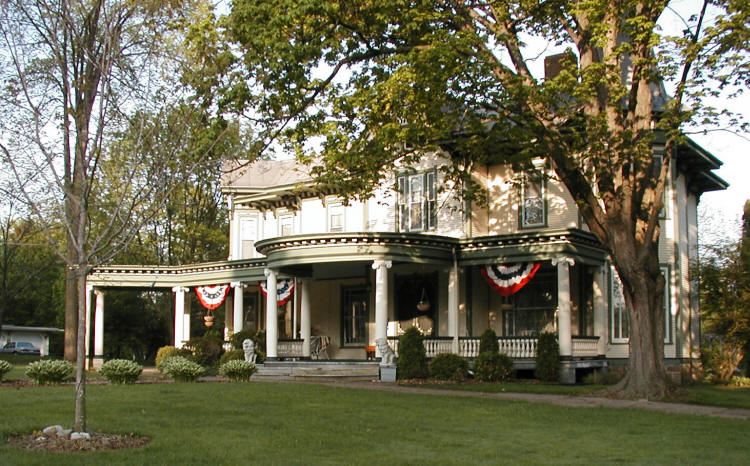 |
7. Mahar/Bruley/Dewhurst House (ca. 1878-1882); aka "Tufts Museum" William Mahar was operating a stage line, when he built the north portion of this house. Emery Bruley, a blacksmith, inventor and haberdasher, added the south portion of the house in 1885. Bruley duplicated the Italianate architectural details adding additional Queen Anne embellishments. Lumber baron, banker, and state legislator, Richard Dewhurst, purchased the home in 1886. Dewhurst added the tower roof to the north angled bay and the Colonial Revival Porch with Porte-cochere. Sketch by B. Harder. |
|
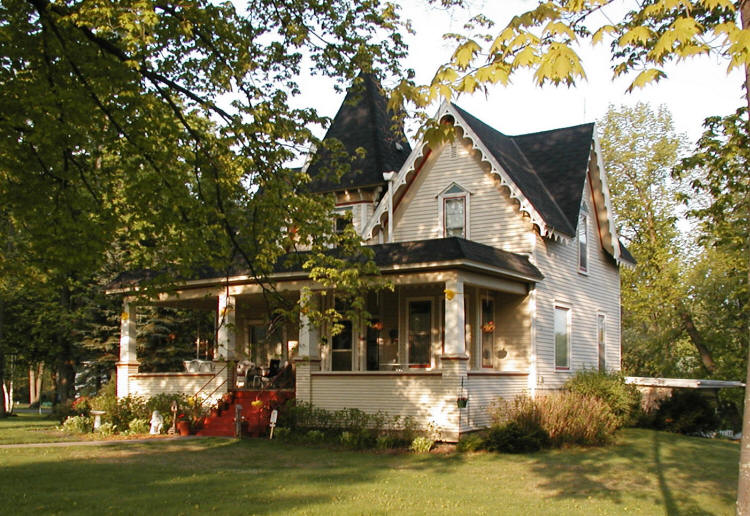 |
8. James L. Gates House (ca 1872-1876) James L. Gates was one of the largest pineland holders in the U.S.A. in the late 1800's. Most of his 800,000 acres were located in Wisconsin and Florida. Gates also operated the largest mercantile in Neillsville and erected two brick buildings. The Gothic Revival style house was built before 1876. The gable end verge boards exhibit detailing created with the newly perfected scroll saw. When built, the front facade did not have a porch, the prairie style porch was added at a later time. Sketch by B. Harder. |
|
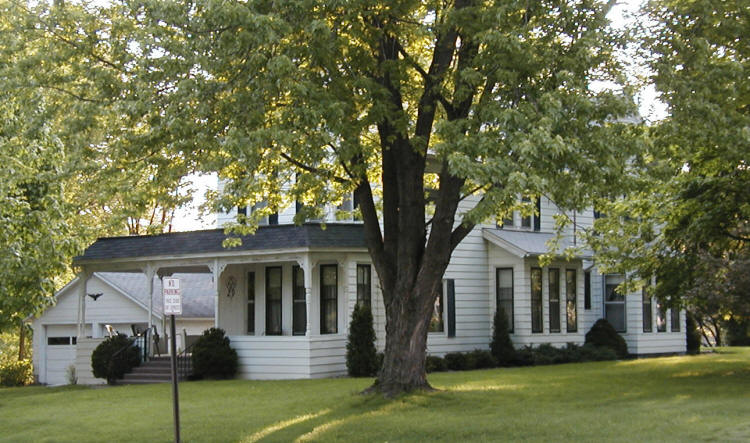 |
9. James Sturdevant-29 Hewett Street This home was built for James Sturdevant in 1857. Subsequently, it was owned by Daniel Gates. J. W. Mason purchased the home in 1886. In 1889, Mary Jane (McMahon) Huntzicker purchased the residence following the death of her husband, Jacob Huntzicker of Greenwood, and moved in with her children. In December of 1891, the house was the setting for her marriage to Homer Root, a colorful Neillsville attorney. They lived in the house until 1920. She was an energetic lady, constantly organizing meetings at 29 Hewett for everything from clothing-drives for the needy to spiritualist meetings. In 1920 they moved to the bungalow Homer Root built at 313 Hewett. Mary Jane Root died there in 1927. (source: Cecily Cook, g-g granddaughter of Jacob Huntzicker). In 1920, Jewel and Cad Neverman purchased the home. The Nevermans are well remembered grocery merchants having a business on Hewett Street where the Neillsville Professional Building is now (2007) located. Another owner of the home was Mrs. Charles (Lila) Hubing. Sketch by B. Harder. |